
Guest post by Muralikrishna.
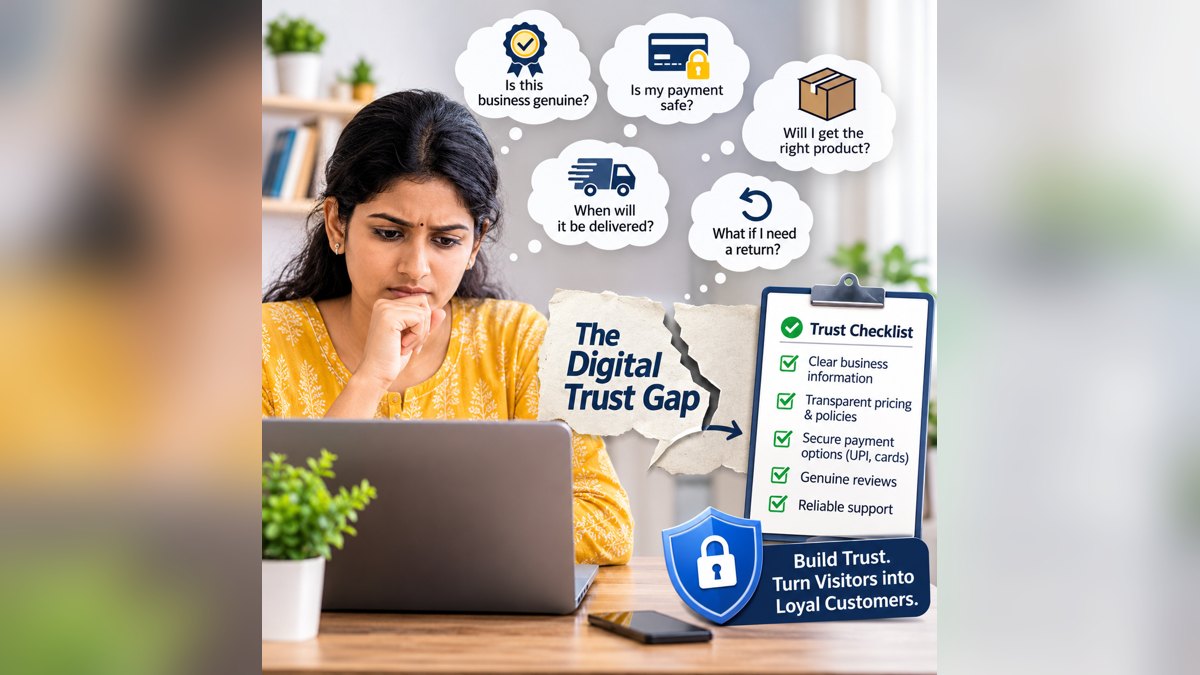
A potential customer visits an online store, explores a few products, checks the prices and perhaps even adds something to the shopping cart. However, when it is time to make the payment, they leave without placing an order.
This situation is familiar to many small-business owners. They invest time in building websites, posting on social media and attracting visitors, yet a considerable number of interested customers never become buyers.
The problem is not always the product, price or marketing strategy. Sometimes, customers simply do not feel confident enough to complete the purchase.
This uncertainty is known as the digital trust gap. It develops when customers cannot find enough reliable information to feel comfortable dealing with an online business. For small businesses in India, closing this gap requires more than attractive product photographs or regular promotional posts. It requires transparency, consistency and a customer experience that makes people feel secure at every stage of the buying process.
1. First Impressions: Why Customers Question an Online Business
When customers discover an unfamiliar business online, they naturally look for signs that it is genuine. They may check the website, visit the contact page, search for the business on Google or look through its social media accounts.
If these sources provide incomplete or conflicting information, doubts begin to develop.
For example, a website might display attractive product photographs but provide no business address, working contact number or clear information about the people behind the business. Even if the products are genuine, a first-time visitor may hesitate because there is no easy way to verify the seller.
A professional-looking website alone does not establish credibility. Customers also want to understand who they are buying from and how they can get assistance if something goes wrong.
Indian online businesses should pay attention to the Consumer Protection (E-Commerce) Rules, 2020. These rules establish disclosure and consumer protection requirements for e-commerce businesses. Among other things, e-commerce entities are required to display their legal name, principal geographic address, website details and customer-care contact information in a clear and accessible manner. They must also provide information about their grievance redressal arrangements.
Sellers operating through marketplace platforms have additional information-sharing responsibilities under Rule 6, including providing relevant seller details and other required purchase information. Applicable GSTIN and PAN details must be supplied to the marketplace where required.
Illustrative example: Imagine a newly established handmade jewellery business in Jaipur. Its website displays several attractive collections, but customers cannot easily locate its contact details, business address or customer support information. A potential buyer might decide to postpone the purchase until the business provides enough information to establish confidence.
For small businesses, making essential information easy to find is one of the simplest ways to reduce uncertainty.
2. Customer Reviews: A Small but Important Trust Signal
Before purchasing from an unfamiliar business, customers often look for experiences shared by previous buyers. Reviews can help them understand product quality, delivery reliability and customer service.
However, the presence of hundreds of ratings does not automatically establish credibility. Customers may become suspicious when feedback appears repetitive, exaggerated or disconnected from the products being offered.
Illustrative example: A home-based bakery in Chennai receives orders through WhatsApp but has very little publicly available customer feedback. A new customer interested in ordering a birthday cake may hesitate because they have no independent indication of the bakery’s product quality or service.
Businesses should allow genuine customer experiences to speak for themselves. Honest feedback, including professionally handled complaints, provides a more dependable trust signal than artificial praise.
3. Hidden Costs and Payment Uncertainty: What Makes Customers Stop at Checkout?
A customer may be comfortable with a product’s advertised price but become uncertain when additional charges appear during checkout.
Delivery fees, packaging charges, installation costs and taxes can change the final amount considerably. When these expenses are revealed only at the last stage, customers may feel that the business has not been transparent.
Clear pricing is therefore essential. Businesses should communicate the total payable amount and explain any applicable additional charges before customers confirm their purchases.
Payment methods also influence buying confidence. In India, customers are familiar with options such as UPI, debit and credit cards, net banking and cash on delivery, depending on the seller and product category.
UPI has become a familiar payment option for many online shoppers. However, simply displaying a UPI logo is not enough. Customers should be able to identify the merchant receiving the payment and receive a clear confirmation after completing the transaction.
Cash on delivery can be useful for businesses serving customers who are uncomfortable making advance payments. However, it is not suitable for every product or business model. Sellers should consider delivery costs, return risks and operational requirements before offering it.
Illustrative example: Consider a small furniture seller in Bengaluru advertising a study table at an affordable price. During checkout, the customer discovers additional transportation and installation charges that were not clearly explained earlier. The unexpected increase may cause the customer to reconsider the purchase.
The seller could prevent this uncertainty by displaying the delivery conditions, installation costs and available payment options before checkout.
A transparent payment experience does not guarantee a sale, but it removes unnecessary reasons for customers to abandon one.
4. Social Media Promises Must Match the Actual Customer Experience
Social media has made it easier for small businesses to reach potential customers without operating a physical retail store. However, an active Instagram or Facebook account does not automatically make a business trustworthy.
Customers look beyond follower counts. They want to understand whether the products are genuine, whether the business communicates honestly and whether the items delivered will match what they see online.
One common problem is the difference between promotional content and actual product quality.
Businesses sometimes use heavily edited photographs, exaggerated descriptions or unrealistic delivery promises to attract attention. While these methods may generate initial interest, they can create disappointment when customers receive something different from what they expected.
Consistency matters across every customer interaction.
Product descriptions should explain important details such as dimensions, materials, colours, ingredients and usage instructions wherever relevant. Photographs and videos should represent the actual products as accurately as possible.
Communication after an order is equally important. Customers appreciate receiving order confirmations, dispatch updates and realistic delivery timelines. If delays occur, informing customers early is better than leaving them waiting without an explanation.
Illustrative example: Imagine a small home décor business in Hyderabad selling decorative lamps through Instagram. Its promotional photographs show products with particular colours and finishes, but customers receive items that look noticeably different. Even if the seller did not intend to mislead anyone, the difference between the online presentation and the actual product can damage confidence.
Businesses should remember that the customer experience does not end when someone clicks the Buy button. Delivery, communication and after-sales assistance all influence whether that customer will purchase again.
5. Practical Ways Small Businesses Can Build Digital Trust
Closing the digital trust gap does not necessarily require expensive technology or complicated marketing campaigns. Many improvements involve making existing business information clearer and communicating more responsibly.
Here are some practical areas small businesses should review:
- Make business information accessible. Ensure customers can find the business name, relevant address, working contact details and customer support information without searching through multiple pages.
- Explain policies before checkout. Delivery timelines, return conditions, exchange procedures, refund information and applicable shipping charges should be written in simple language.
- Use dependable payment options. Provide clearly explained payment methods, use appropriate payment service providers and communicate how customers can identify successful transactions.
- Present products honestly. Use accurate photographs, descriptions and videos. Avoid making claims that the actual product or service cannot support.
- Respond to customer concerns. Answer enquiries professionally and provide updates when orders are delayed or problems arise.
- Maintain consistency. The information displayed on the website, social media accounts and other selling platforms should not contradict itself.
These improvements help customers understand what to expect before spending their money.
6. The 15–20-Minute Digital Trust Checklist
Small-business owners do not need to conduct a complete website audit every time they want to improve customer confidence. A short review of the most important customer-facing details can reveal problems that are easy to overlook.
Set aside 15–20 minutes and go through this checklist:
Business information (3 minutes)
- Is the business or legal name clearly displayed?
- Can customers easily find the contact page, relevant business address and working contact details?
- Is customer support information easy to access?
- Are applicable grievance officer details displayed where required?
Pricing and policies (4 minutes)
- Is the total product or service price clear?
- Are delivery charges and other additional costs explained?
- Are delivery timelines realistic?
- Are return, exchange and refund conditions easy to understand?
- Are warranty or guarantee details provided where applicable?
Payment experience (3 minutes)
- Are available payment options clearly mentioned?
- Are UPI and other supported payment methods explained accurately?
- Is the payment recipient identifiable?
- Does the customer receive an order or payment confirmation?
- Are cash-on-delivery conditions explained if this option is offered?
Product and social media consistency (4 minutes)
- Do product photographs accurately represent the items being sold?
- Are descriptions and important product details complete?
- Do website and social media details match?
- Are promotional claims realistic and supported by the actual offering?
Customer communication (3–5 minutes)
- Is there a clear process for responding to customer enquiries?
- Are genuine customer reviews presented honestly?
- Can customers receive updates about their orders?
- Is there a process for handling complaints and after-sales questions?
If any item cannot be checked, note it down and prioritise fixing it. Even a small correction, such as adding a missing delivery policy or updating an incorrect phone number, can remove an unnecessary obstacle in the buying journey.
Conclusion: Trust Is Built Before the Customer Clicks Buy
Attracting visitors to an online business is only one part of building a successful digital presence. The bigger challenge is helping those visitors feel confident enough to become customers.
People do not make purchasing decisions based solely on attractive advertisements, discounts or product photographs. They also consider whether a business is genuine, whether its information is transparent and whether they will receive the support they need after making a payment.
For small businesses in India, trust does not have to begin with expensive investments. It can start with accurate product information, accessible contact details, transparent pricing, reliable payment processes and honest communication.
When businesses consistently deliver what they promise, customers have fewer reasons to hesitate. Over time, these everyday actions can help turn first-time visitors into confident buyers and lasting customer relationships.
Related reading on SyncNeck: how to audit the promise between an ad and its landing page, how to use AI to reply to Google reviews and how to test a lead form all the way to the first reply. Want a second opinion on how trustworthy your own site looks? Contact the SyncNeck team.
AI assistance: the author used AI tools to help write and edit this article, then reviewed it and is responsible for the final content. The business examples are illustrative. This article is general information, not legal advice.
About the author

Muralikrishna is a freelance digital marketer based in Coimbatore who works on SEO, content and social media for small businesses through Muralibiz.