
Guest post by Ioannis Malathouniadis.
1. Start with a customer decision
The teacher is ready. Someone has borrowed a tripod. The classroom is tidy. Then the person holding the phone asks, “What should we say?”
It is an expensive moment to discover that nobody has agreed what the video is for. Even when production costs nothing, the shoot takes time away from teaching, serving customers or running the business.
Put the filming decisions on one page that both the speaker and camera operator can use. It should tell them what to explain, what to show and what to check.
You do not need a production crew to use this brief. Agree the answer, choose what to show and check the details before filming.
We will follow an imaginary neighbourhood coaching centre in Pune offering a Class 10 mathematics trial lesson. All its details are invented for this exercise. It is not a MAVERIX client or a report of business results.
2. Who is this video for, and what are they trying to decide?
“Parents” is a starting point, but it leaves too much unanswered. A parent looking for help with fractions has a different concern from one comparing intensive examination preparation programmes.
For our centre, choose parents of Class 10 pupils who live within practical travelling distance and are considering a first visit. Their immediate decision is whether the trial lesson is worth arranging. The video need not persuade them to pay for a whole term.
Write the decision in the customer’s words: “Will this lesson help me see whether the teacher explains things in a way my child understands?” That sentence gives the video a job.
Local detail should earn its place. The subject, class level, neighbourhood and lesson language help someone judge suitability. A sweeping statement about what “Indian parents want” does not. Ask the person who handles enquiries which questions callers actually raise. Use those questions without reproducing private messages or identifying families. A restaurant could address workers deciding whether they can collect lunch during a short break; a repair shop could explain when to bring in a faulty mixer.
3. What single question will the video answer?
For the coaching centre, use: “What happens during the trial mathematics lesson?”
Answer it in one sentence before writing a script: “Your child tries a short exercise, works through one problem with the teacher, then receives feedback on what to practise next.”
That answer is a useful editing rule. Keep footage that explains those steps. Save the founder’s story, the full subject list and the annual celebration for other videos.
Begin with the question or the situation. “Wondering what your child will do in a trial maths lesson?” gives a parent a reason to continue. An opening about being passionate, innovative and committed still leaves the practical question unanswered.
Read the answer aloud. Replace phrases such as “individualised pedagogical intervention” with words you would use across the reception desk. If an important condition changes the answer, include it. For example, say whether the trial is a group session or an individual lesson.
4. What can we show as evidence?
Make a small list of visible details that support the answer. For this example: the exercise sheet, the teacher explaining one worked problem and a sample feedback note.
These details let a parent inspect part of the process. A shot of an impressive entrance cannot show how a teacher explains an equation. A smiling pupil cannot prove that grades will improve.
You can demonstrate the process without filming a class. Ask the teacher to work through the example in an empty room. Label the footage “Demonstration” and the feedback note “Sample”. Remove real pupil names, marks and contact details from anything in view.
A demonstration has limits. It shows the teaching approach being demonstrated; it does not establish typical examination results or guarantee that every child will find the lesson suitable. Keep that distinction when writing captions. A restaurant can show its collection process; a tailor can demonstrate an alteration measurement. Choose something the viewer can examine.
5. What should the viewer do next?
Match the next step to the decision. After a trial-lesson explanation, “Message TRIAL for the timetable” is a smaller, more relevant request than “Enrol today”.
Give one route and explain what happens there. If the video appears on the centre’s Instagram account, the closing instruction can ask the parent to send that account a direct message. Do not also ask them to call, visit, subscribe and share.
Prepare the reply before publishing. It should explain available times, lesson language, duration, cost and booking arrangements. Request only the details needed to arrange the visit. A parent should not have to send a child’s marksheet just to see a timetable.
Assign someone to answer enquiries. A clear video cannot compensate for an inbox nobody checks.
To review the video, record relevant enquiries, confirmed trial bookings and attendance separately. A message is not a booking, and a booking is not enrolment. Ask how people found the centre where appropriate, but do not assume the video caused every subsequent sale.
6. What must the team know before filming?
Write down who speaks, who films, where recording happens and which language the audience will hear. India is not one language market. Choose based on the families this centre actually serves; do not assume English or Hindi will suit everyone.
Specify the intended placement and a manageable length. For this example, a roughly 45-second vertical Instagram video gives enough space for the question, the demonstration and the next step. This is a production choice, not a promise of better performance.
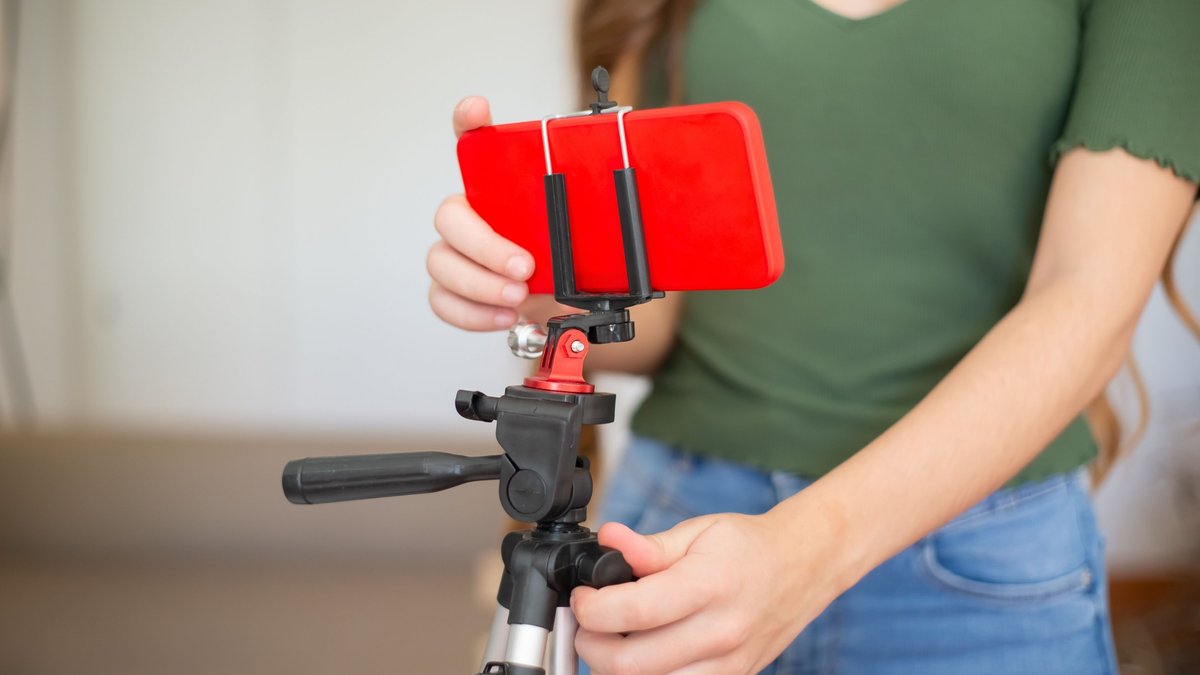
Clean the phone lens and steady it at eye level on a tripod or stable support. Face the teacher towards a window for soft natural light; avoid a bright window behind them. Use a quiet room, move close enough for clear speech and record a ten-second test. Listen back and check the board is readable before continuing.
For English and a regional language, prepare two checked text versions. Here, transcribe the Marathi speech first, then translate it into English. Have a fluent bilingual reviewer check meaning, mathematical terms, prices and the booking instruction; correct automatic captions rather than trusting them. Include meaningful sounds where needed. Use separate captioned exports, one per language, to avoid crowding the screen. Keep text readable against the picture, synchronised with speech and clear of equations and app controls. Preview both versions on a phone with sound off.
Agree permission with adults who appear. In this example, use no pupils on camera. Check the background for names, attendance lists and other private material.
Finally, name the person who checks the claims and approves the cut. They should confirm the actual trial format, cost, availability and message route. Remove statements such as “guaranteed marks” that the demonstration cannot support. If a factual detail remains unresolved, settle it before recording that line.
7. A completed brief and a reusable blank version
Completed brief
Illustrative business: An unnamed, hypothetical coaching centre in Kothrud, Pune. Every operational detail below is an assumption for this example, to be replaced with verified details in a real brief.
1. Who is this video for, and what are they trying to decide? Parents of Class 10 pupils in and around Kothrud who are considering extra mathematics support. Decision: whether to arrange a trial to see how the teacher explains a problem. This example assumes these families are comfortable with Marathi explanations and English mathematical terms.
2. What single question will the video answer? “What happens during the trial maths lesson?” Answer: a 30-minute individual session comprising a five-minute exercise, a 15-minute guided problem and ten minutes of feedback. The trial costs ₹0, with no requirement to buy further lessons. These are fictional offer terms, not a recommended universal pricing model.
3. What can we show as evidence? The teacher demonstrates one linear equation, shows the short exercise and points to a sample next-practice note. Film only the teacher and materials in an empty classroom. Display “Demonstration” and “Sample feedback”; use no pupil records, testimonials, marks or claimed improvements.
4. What should the viewer do next? “Message TRIAL to this Instagram account for the timetable.” The receptionist replies during opening hours with available Saturday slots between 10 am and noon, the 30-minute duration, language, location and free-trial terms. A place is confirmed only after the parent and receptionist agree a slot. Track enquiries, bookings and attendance separately for the first seven days.
5. What must the team know before filming? Speaker: mathematics teacher. Camera: administrator using a phone and tripod. Location: quiet, empty classroom with window light. Language: Marathi, with familiar English mathematical terms and checked Marathi captions and English subtitles. Output: two captioned versions of the same vertical video, approximately 45 seconds each. No music is needed. The teacher checks the explanation; the receptionist checks the booking route. The owner verifies all offer details, confirms the teacher’s filming permission and approves the final cut before posting.
How that brief becomes a video
- 0–6 seconds: Teacher asks the trial-lesson question directly to camera.
- 6–25 seconds: Show the exercise and one explained step, labelled “Demonstration”.
- 25–35 seconds: Show sample feedback and explain the next-practice recommendation.
- 35–45 seconds: State “30-minute individual trial, no charge, no enrolment obligation”, then give the single message instruction.
The video shows selected moments from a 30-minute session. It should not suggest that the whole lesson takes 45 seconds.
Copyable blank brief
- Business and video placement: ____________
1. Who is this video for, and what are they trying to decide?
- Audience, local situation and immediate decision: ____________
2. What single question will the video answer?
- Customer question: ____________
- One-sentence answer, including essential conditions: ____________
3. What can we show as evidence?
- Demonstration, process or detail: ____________
- What it proves, what it does not prove, and any labels needed: ____________
4. What should the viewer do next?
- Exact instruction and contact route: ____________
- Response owner and information supplied: ____________
- Action to count and review date: ____________
5. What must the team know before filming?
- Speaker, camera operator and location: ____________
- Spoken language, caption languages, translation reviewer, format and length: ____________
- Permissions and private details to exclude: ____________
- Claims and offer terms to verify, checker and final approver: ____________
Before filming, read the brief aloud together. Can the speaker answer the question? Can the camera show the evidence? Can the business deliver the next step? Resolve any “no” before pressing record.
Related reading on SyncNeck: why Instagram reposting accounts are losing reach and how to use AI to reply to Google reviews. Planning a video for your business? Contact the SyncNeck team.
AI assistance: the author used ChatGPT to develop the outline, draft and revise the text, and assist with editorial checks, then reviewed and edited the final text. The coaching-centre example and offer terms are fictional; they do not describe a client or measured business results.
About the author
Ioannis Malathouniadis is a communications specialist and founder of MAVERIX, a Greek agency established in 2020. His work focuses on content strategy, short-form video and business training.