
ChatGPT shopping results are product cards that appear inside ChatGPT when someone asks what to buy, with images, prices, reviews and links to the seller. OpenAI says these results are chosen independently and are not ads. For small sellers, it means a new way to be found that rewards clear product information, fair prices and a strong own website, not ad budgets.
If you sell online, even through a small Shopify, WooCommerce or Instagram store, this post explains how ChatGPT picks products, what has changed in 2026, and the steps that make your products easier to recommend.
Last checked: 4 October 2026, against OpenAI’s merchant and help pages.
Key takeaways
- OpenAI says product results in ChatGPT are not ads and are not influenced by partnerships.
- Sellers are ranked on availability, price, quality and whether they are the maker or primary seller.
- Shopping is live for ChatGPT users in the US, with more regions planned. Shopify and Etsy products are included automatically.
- Most purchases now finish on the seller’s own website, and OpenAI charges no fees on purchases that start in ChatGPT.
- Separately, labelled ads started showing in ChatGPT in India on 29 August 2026 for Free and Go users.
What are ChatGPT shopping results?
When someone asks ChatGPT a buying question, such as “best running shoes under ₹5,000” or “a gift for a coffee lover”, ChatGPT can show a set of product cards. Each card has an image, price, short description, review summary and links to the shops that sell it. The shopper can ask follow-up questions, compare options and then click through to buy.
OpenAI describes these as rich results “with images, pricing, and key details in one place”, shown “when shoppers are actively evaluating what to buy” (OpenAI for merchants). In other words, people see your product at the exact moment they are deciding.
How does ChatGPT choose which products to show?
ChatGPT picks products based on how well they match what the shopper asked, using structured product data such as price and description from the seller and other providers. It also uses the shopper’s own context, such as saved preferences. According to OpenAI’s help article on shopping results, the results “are selected independently by ChatGPT and are not ads, nor influenced by any OpenAI partnerships.”
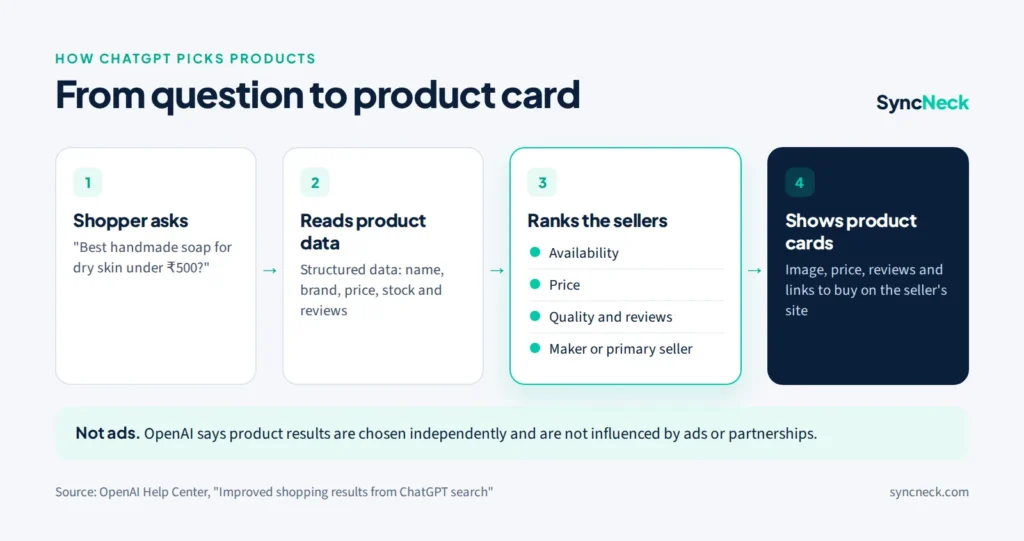
When the same product is sold by several shops, OpenAI says merchants are ranked on factors like:
- Availability: is it in stock and can it be delivered?
- Price: is the price clear and competitive?
- Quality: does the seller have a good reputation and reviews?
- Maker or primary seller: is this the brand that makes the product, or its main seller?
That last point is good news for small brands. If you make your own products, selling them on your own website, not only through a marketplace, helps you show up as the primary seller.
What changed in 2026
- Checkout moved back to sellers’ websites. OpenAI launched Instant Checkout, buying inside the chat, in September 2025. Its merchant page now says shoppers “discover and evaluate products in ChatGPT, but purchases are completed on merchant-owned websites or apps.” Your own checkout, payment options and delivery promises matter again.
- Shopify and Etsy are connected automatically. Shopify product data reaches ChatGPT through Shopify Catalog, and Etsy listings are included too, with no extra setup.
- Direct product feeds for everyone else. Other sellers can share a product feed through SFTP, APIs or feed providers, and OpenAI says a self-serve merchant platform is coming.
- Ads arrived, but separately. ChatGPT started showing ads in India on 29 August 2026, only for Free and Go users. OpenAI says ads are labelled, kept apart from answers and do not influence them. At launch, Indian advertisers bought through OpenAI’s sales team, without self-serve tools.
Is ChatGPT shopping available in India?
OpenAI’s merchant page says shopping is “currently live for ChatGPT users in the U.S.” with more regions planned. Indian shoppers can still ask ChatGPT for product advice, and ChatGPT search can still find and link to your shop pages. So the steps below help you today, and put you ahead when full shopping results reach India.
8 steps to get your products recommended by ChatGPT
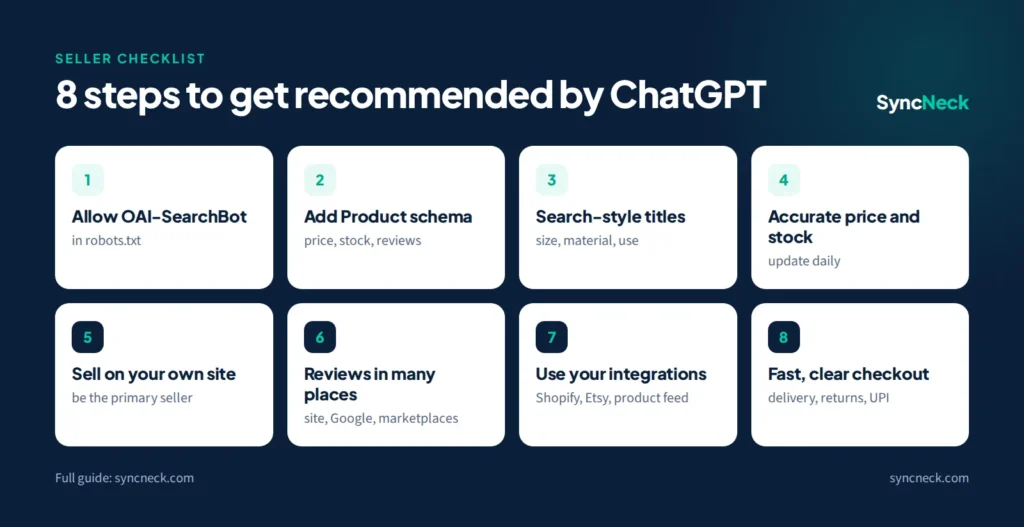
1. Let ChatGPT’s search crawler in. ChatGPT search uses a crawler called OAI-SearchBot. Check that your robots.txt does not block it. Our AEO and GEO checklist shows a safe robots.txt setup.
2. Add Product structured data. ChatGPT relies on structured product data. Make sure every product page has Product schema with name, brand, price in rupees, availability, images and reviews. WooCommerce and Shopify add most of this for you, and SEO plugins like Yoast or Rank Math can fill the gaps.
3. Write titles and descriptions people actually search for. “Cotton kurta” is weak. “Women’s handloom cotton kurta, straight fit, sizes S to 3XL, made in Jaipur” answers the questions a shopper asks ChatGPT. Include size, material, use, who it is for and what makes it different.
4. Keep price and stock accurate. Availability and price are ranking factors. Out-of-date prices or out-of-stock items that still show “in stock” hurt trust with shoppers and with AI tools.
5. Sell on your own website, not only on marketplaces. Being the maker or primary seller helps your ranking. A simple store on your own domain gives ChatGPT a clear, official source for your products.
6. Collect reviews in more than one place. Reviews on your site, Google Business Profile and marketplaces all show quality. Ask happy customers for a short review that mentions how they used the product.
7. Use the integrations you already have. On Shopify, your products reach ChatGPT through Shopify Catalog. On Etsy, listings are included automatically. On WooCommerce or a custom store, keep a clean product feed, such as the one you use for Google Merchant Center, ready to share when OpenAI’s self-serve platform opens.
8. Make your checkout fast and trustworthy. Because purchases finish on your site, a slow page or a confusing checkout loses the sale ChatGPT sent you. Show delivery times, returns policy and payment options like UPI clearly.
How to see if ChatGPT sends you shoppers
Check GA4 for visits from chatgpt.com, and ask ChatGPT your customers’ questions once a month. In GA4, go to Reports, then Acquisition, then Traffic acquisition, and look for the session source chatgpt.com. Links from ChatGPT often carry the tag utm_source=chatgpt.com, which makes them easy to spot.
Then write down five questions your customers might ask, such as “best handmade soap for dry skin in India”. Ask them in ChatGPT every month and note whether your shop or products appear. That simple log shows whether your changes are working.
Should small sellers buy ChatGPT ads?
Not yet, for most. Ads in India launched without self-serve tools, so small budgets have no easy way in, and there is little public data on results. Product results are free and are not affected by ads. Put your effort into the eight steps above first, and revisit ads once self-serve buying and real case studies are available. If you already run ads elsewhere, our PPC guide covers the basics that will carry over.
Quick answers
Are ChatGPT shopping results ads?
No. OpenAI says product results are selected independently by ChatGPT and are not ads or influenced by partnerships. Ads in ChatGPT are shown separately and clearly labelled.
Is ChatGPT shopping available in India?
OpenAI says shopping is live for ChatGPT users in the US, with more regions planned. Indian shoppers can still ask ChatGPT for product advice, and ChatGPT search can link to your shop pages.
Do I need Shopify to appear in ChatGPT shopping?
No. Shopify and Etsy products are connected automatically, but other stores can share a product feed with OpenAI. Clear product pages with Product schema also help ChatGPT search find you.
Does OpenAI charge sellers a fee?
OpenAI says there are no fees on purchases that start in ChatGPT. Most purchases are completed on the seller's own website or app.
More on how AI is changing search and selling: visit our AI in digital marketing page, or read why AI Overviews are taking clicks from Google.